
Indicaties
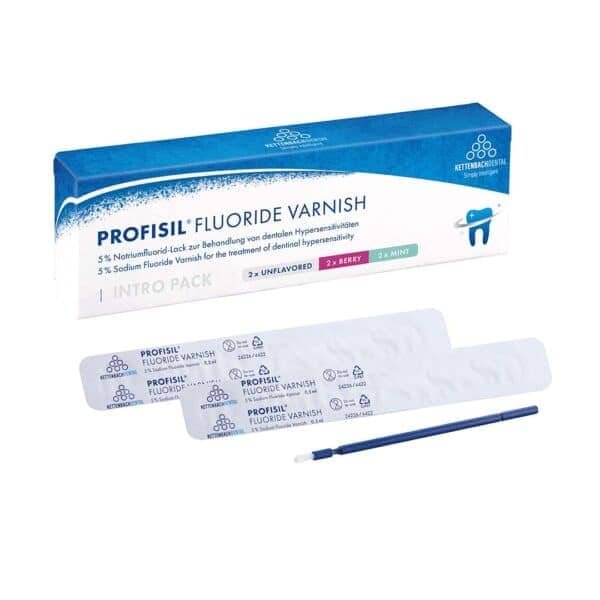
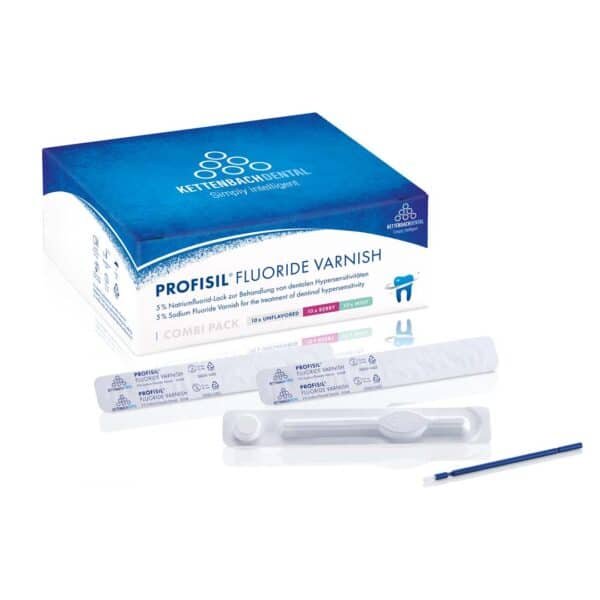
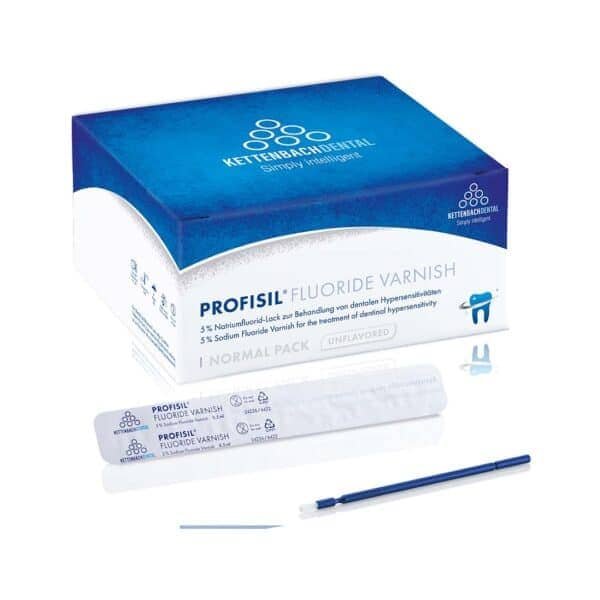
Profisil
The New Dimension in Prevention with Profisil® Fluoride Varnish
Profisil® Fluoride Varnish contains 5% sodium fluoride (22,600 ppm) in a mucosa-friendly gel with a pleasant taste.
Its unique dimethicone gel base adheres firmly to the tooth surface for several hours and continuously releases fluoride ions for up to 24 hours.
Frequently asked questions
Yes, sodium fluoride varnish can certainly be useful for children with enamel hypoplasia, although it does not provide a direct solution for the lack of enamel. Sodium fluoride varnish strengthens the existing enamel and can help protect the teeth against caries (cavities) and further wear. Fluoride supports the remineralisation of the tooth surface, making the teeth somewhat stronger, even when hypoplasia is present. Although it cannot create enamel where it is missing, it can relieve symptoms and limit further damage.
For children with severe hypoplasia, additional treatments are often required, such as restorations with composite fillings or even crowns, depending on the severity of the problem. A dentist can advise on the best treatment options based on the child’s individual situation.
Both the dental team and the patient notice a clear difference between Profisil® and competing products. They confirm the user-friendliness and positive results after treatment with Profisil®.
Patients report that their symptoms have disappeared or that sensitivity has been significantly reduced.
- Treatment of sensitive teeth
- Sealing of dentinal tubules, for example before cavity preparations or on sensitive root surfaces
- Treatment of tooth necks after professional cleaning and scaling
Sensitive teeth are a common problem for many people. This hypersensitivity is mainly caused by exposed dentinal tubules.
Profisil® is transparent and colourless, preventing discolouration of the teeth.
Desensitisation means ‘making insensitive to certain substances’.
Profisil® Varnish replenishes the calcium fluoride deposit and seals the dentinal tubules. This creates a stable, durable protective layer with rapid desensitisation and fluoride release (5% NaF ≙ 22,600 ppm fluoride).
Profisil® is easy to apply and adheres immediately and well to the tooth surface thanks to its unique dimethicone gel base.
Profisil® from Kettenbach is a protective, fluoride-containing varnish specially developed for the treatment of tooth sensitivity and to support prophylactic treatments.
Just one SingleDose (0.5 ml) for a complete fluoride application treatment. Simple, easy, leak-proof and hygienic to apply (even between teeth) without additional instruments.
Profisil® is ideal for treating patients who are less compliant with treatment advice, such as children.
Profisil® can be applied easily and without leakage (from different directions) for accurate local fluoride application to the teeth. Profisil® can even be applied to moist teeth. Drying the tooth surface is therefore not essential.
When used normally*, products containing dimethicone are safe for babies, children and adults.
(*) This means using a product as intended or as described on the label.
Dimethicone is a synthetic oil based on silicone. The chemical substance has a moisturising effect. Dimethicone moisturises and protects your skin and hair from drying out. It makes the skin feel soft and fills in small wrinkles. Dimethicone is therefore found in personal care products such as sunscreen, face cream, lip balm, deodorant, shampoo, conditioner and make-up primer.
Redness, small pimples and possibly blisters may appear at the site of contact with colophony (e.g. a plaster). Later, flakes will appear on the skin. If you continue to suffer from allergic contact eczema caused by colophony, your skin may become thickened. The areas on your skin may itch. Sometimes eczema can develop on the face. This may be caused by vapours from the substance, for example, vapours from soldering, floor wax and paper dust, which are spread through the air.
This substance contains a mixture of different types of colophony of Portuguese, Chinese and American origin. Colophony consists of various acidic resins, mainly abietic acid, and is obtained from the residue of coniferous balsam or coniferous roots. Colophony or its derivatives are found, usually hidden, in numerous everyday items.
Ethanol, also known as ethyl alcohol, is the best known and most common alcohol, as it is a widely used solvent and the alcohol found in alcoholic beverages. The molecular formula of ethanol is C₂H₅OH, with a molecular weight of C₂H₆O, which is often abbreviated as EtOH.
Most dental insurers reimburse the application of fluoride varnish.
Wait until the next day to brush your teeth and avoid hot, hard or sticky foods after application. Hard or sticky foods can cause the varnish to come off.
Fluoride varnish protects teeth for months. It works best when reapplied every three to six months.
Fluoride varnish is applied to the teeth with a brush by a trained dentist, dental hygienist, doctor or nurse. It is a quick and easy process and causes no pain or unpleasant taste. The varnish sticks to the teeth and the teeth may temporarily appear yellowish or less shiny. These changes are normal and will disappear when the teeth are brushed the next day.
Yes. Fluoride varnish is safe for all ages. It can even be used on babies when their first teeth come through. If you have any questions or concerns about using fluoride varnish, talk to your doctor or dentist. Children should visit the dentist from the age of 1 year.
Cavities can cause pain and infections, which can lead to problems with eating, speaking, playing and learning. Fluoride varnish strengthens teeth, prevents cavities from getting worse and helps prevent new cavities from forming.
Fluoride varnish is a protective coating that is applied to the teeth to help prevent cavities.