
Registration material accessories
Always choose original Kettenbach Dental mixing tips to ensure the desired product mixing can be guaranteed.
Optimised 50 ml cartridge
You can recognise the corresponding mixing tip by the colour coding (red or blue) on the sealing cap of the different 50 ml cartridges.
Frequently asked questions
Visalys® CemCore from Kettenbach Dental is a dual-curing, reliable adhesive composite cement for the predictable cementation of all indirect restorations. Visalys® CemCore is a 2-in-1 product that can also be used for the fabrication of core build-ups and build-up fillings. Optimised adhesive bonds thanks to the unique Active-Connect Technology. Visalys® CemCore has excellent flow properties, is radiopaque, bisphenol-A-free and ready for use.
The correct procedure for taking an alginate impression for an individual edentulous tray.
Determine the tray size based on the old denture. If in doubt, choose one tray size larger for the upper jaw and one tray size smaller for the lower jaw. For a large jaw, it is best to use a tray for a dentate jaw and apply yellow beeswax to the trigonea. Coat the trays with the appropriate adhesive and make the alginate stiff. If using Silginat® (an A-silicone) for the impression, first coat the trays with Panasil® adhesive.
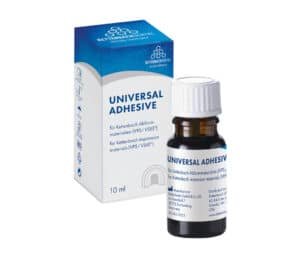
It is important to note that a good individual tray can only be made thanks to a correct preliminary impression with alginate or Silginat® (scan-optimised A-silicone impression material). If trays are to be printed, it is preferable to make the preliminary impression with a scan-optimised impression material. For crown and bridge work, it is important that the tray is not too tight; in addition to blocking out undercuts, sufficient impression space (at least 4 to 5 mm) must also be created. Any inhibition layer on the plastic individual tray can interfere with the curing process of the impression material and must be thoroughly removed before use. After checking the fit, use the appropriate tray adhesive (also just over the edges). An adhesive only has a good adhesive effect once the adhesive layer is dry (after approximately 4 minutes).
Important steps for making a good impression start with preparing the impression tray, selecting the appropriate tray, customising it if necessary, and coating it with the appropriate adhesive, including over the edges. The adhesive will have dried completely by the time the impression is taken, ensuring a secure bond. Tip: if there is a risk of bleeding, take a second impression with a partial tray immediately after removing the mouthpiece. The pressure during the first impression reduces the risk of bleeding. Prepare the mixing gun/syringe/device for use and set the timer to the desired total curing time. The practitioner and assistant should be ready to start spraying the preparation and filling the impression tray simultaneously. Important: remove any retraction cord or paste and cotton rolls from the patient’s mouth just before taking the impression.
Prevent poor impressions by first eliminating any external factors that could adversely affect the processing and curing times of the impression material. These include temperature (warmer or colder than room temperature), latex, a polyether “contaminated” impression syringe, and the inhibition layer (lubricant layer) of temporary restoration material left on the preparation. Furthermore, some retraction agents may have a negative effect on the curing of the impression material; we have not received any complaints about this with regard to Kettenbach impression materials for decades. Use rigid impression trays and ensure that they are coated with the correct tray adhesive; the adhesive must be dry before the tray is filled with impression material. For sufficient pressure build-up with a medium and heavy body consistency, use a closed tray (putty in a perforated tray). With an individual impression tray, ensure sufficient impression space (4 to 5 mm) and remove any inhibition layer. Important: remove retraction cord or paste and any cotton rolls from the patient’s mouth just before taking the impression.
Begin the best preparation for printing by first determining the tray selection and individualising it if necessary. Coat the trays with adhesive before preparation; also just over the edges (adhesive must be dry for the adhesive effect). Prepare a partial tray so that, if desired, a second impression can be made immediately after removal. Due to the pressure during the first impression, there is a good chance that any bleeding will be under control. Prepare the mixing gun/syringe/device for use and set the timer to the desired total curing time. The practitioner and assistant should be ready to start spraying the preparation and filling the impression tray simultaneously.
Important: remove retraction cord or paste and any cotton rolls from the patient’s mouth just before taking the impression.